Slats carried outside the pane
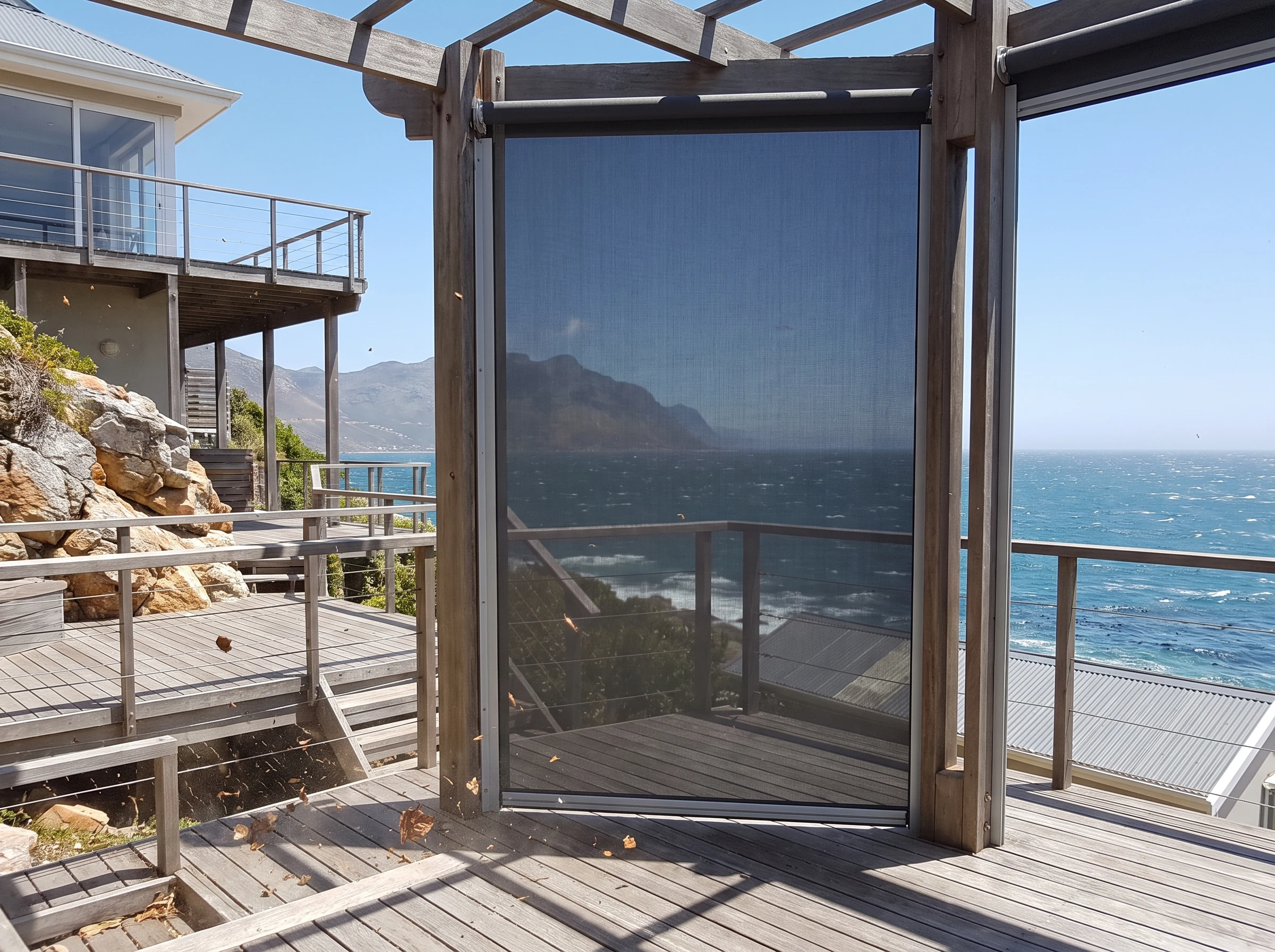
External venetian blinds: aluminium slats mounted clear of the glazing and tilted through the morning. The only product that takes the heat and the low reflected path off the bay while leaving the view intact.
This suburb is only a few dozen metres wide in places, and almost everything that reaches your glass has crossed all of it. So rather than walk the compass, this guide walks the cross-section — from the tide line to the mountain behind — and takes each layer in turn.
Download this guide (PDF, 1.6 MB) to read later or hand to whoever measures up.
St James is a narrow shelf of land pinned between False Bay and a steep mountain wall, sitting between Muizenberg and Kalk Bay. It is unusual among Cape suburbs in that the sea, a railway, a main road and the houses are all stacked within a very short distance of each other, and every one of those layers changes the light, the salt and the noise arriving at a window.
Work outwards from your glass and you cross them in this order.
St James faces roughly east across False Bay, which puts the sun on the wrong side of the day for anybody expecting a Cape Town shading conversation about afternoons. Here, first light comes up out of the bay and travels almost horizontally into the front of the house.
It arrives twice. Once directly, and once again as a reflection off the water — and the reflected half is the one that catches people out, because it comes in from below the direct beam rather than above it. A blind dropped a third of the way down the window blocks the sky, which was never the problem, and leaves the bright path off the sea arriving at exactly seated eye height.
The practical rules on any sea-facing opening here:
And a note on what you are protecting. Between roughly June and November, southern right whales come into False Bay, and a good deal of that season is watched from windows along this shore. It is a genuine argument for a mesh you can see through rather than a heavy fabric you will spend six months looking at.

The railway between Cape Town and Simon's Town, opened along this coast in 1890, runs immediately in front of the houses at St James — closer to the water than the road, and in places closer to the water than anything else in the country. The tidal pool and the row of painted bathing boxes sit right against it.
For a window, the line matters for three reasons, none of them romantic.
The embankment and sea wall lift the whole frontage. That is why so many ground-floor rooms here look over the water rather than at it, and it is why the reflected glare described above tends to strike the middle of a window rather than its base.
In a heavy south-easterly swell the sea comes over the wall and the line, and salt water travels the rest of the way to the buildings on the wind. Anything mounted on the seaward face of a St James house is in a genuinely marine position, whatever the map says about being a road back from the beach.
The coastal path along this stretch is well used. Ground-floor rooms facing it have a privacy question as well as a light question, and those two are best solved with one product rather than two — which is precisely what a banded or double system does: sheer by day, solid when you want the room back.
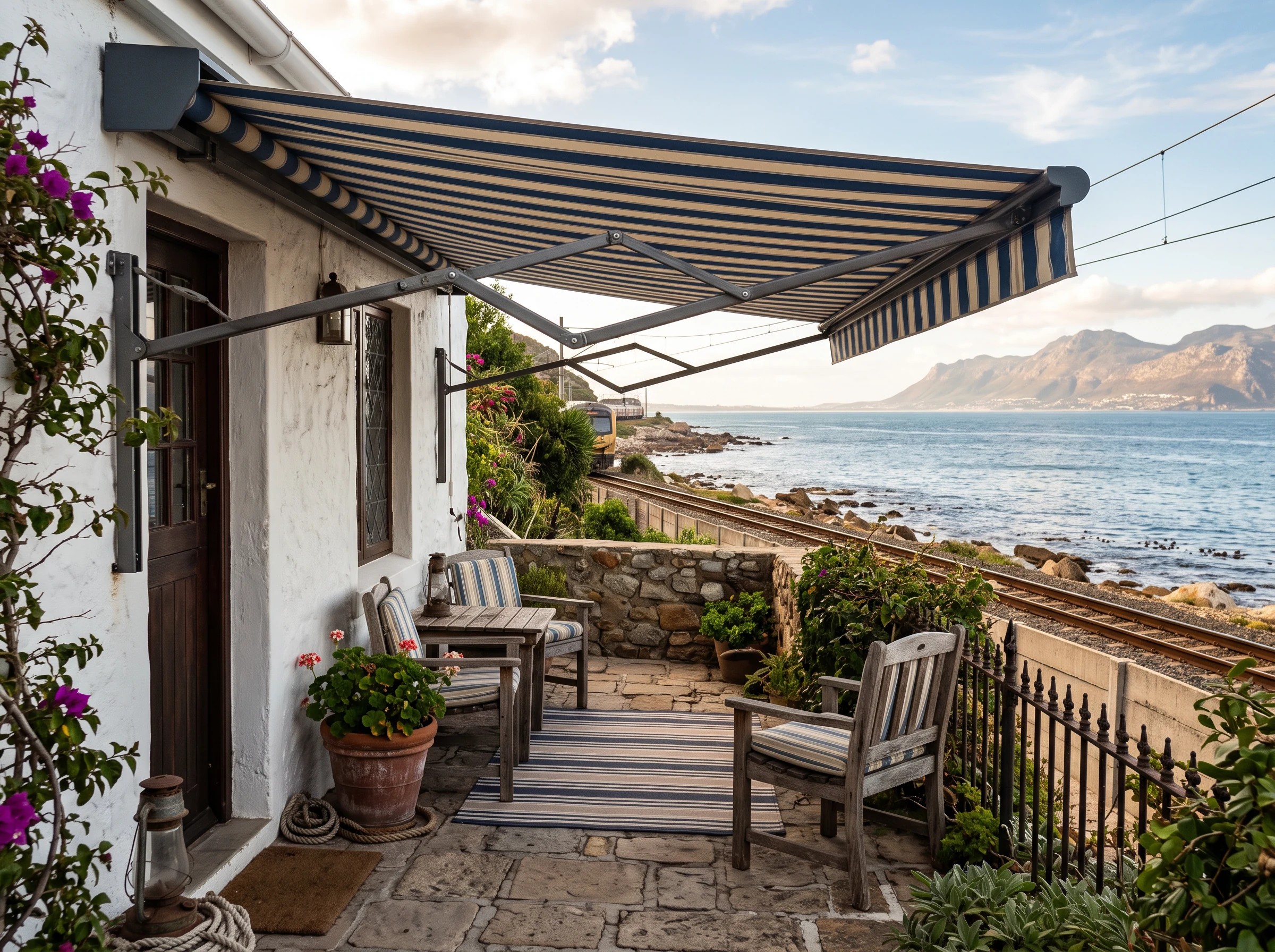
Main Road threads between the line and the older cottages, and on the lower properties it runs close enough to matter.
Two effects worth naming. The first is night light: headlights sweeping a front room after dark is a completely different complaint from daytime glare, and it is one that blockout solves properly and sunscreen does not touch. Be clear which one you are buying for.
The second is dust and grit thrown up off the road surface, which lands on external hardware along with the salt. It is a minor thing individually and a real thing over five years, and it is the reason we suggest external installations on the road-facing side of a house be ones you can flush out with a hose.
Before spending anything, wash the outside of the window that bothers you most. A film of salt and road dust scatters light and makes a room feel far glarier than the sun alone accounts for. It costs nothing, and occasionally it changes the answer entirely.
The building stock along this strip runs to narrow plots and small Victorian and Edwardian houses, many of them added to over a century. Their openings have a character of their own, and it drives more of the specification than the view does.
Measure the width of an original opening at its head, its middle and its sill, and expect a difference. For a blind fitted inside the reveal, the smallest of the three governs. This is exactly why nobody honest gives a firm price for one of these houses over the phone.
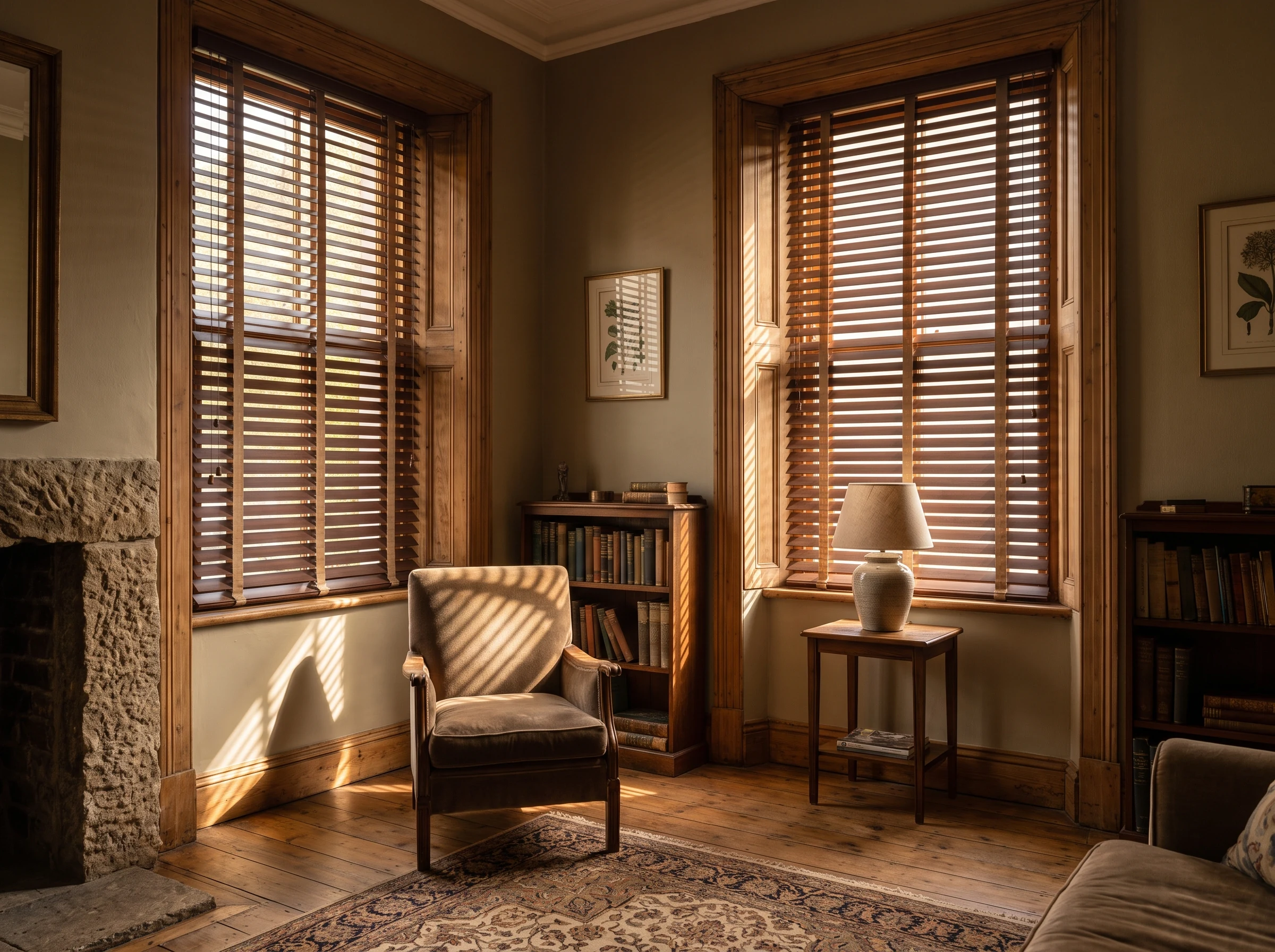
Thick old walls leave a generous return between the wall face and the frame, which means a blind can sit entirely inside the opening. The joinery, the architrave and the proportion of the facade all stay untouched, and nothing new appears on the front of the building.
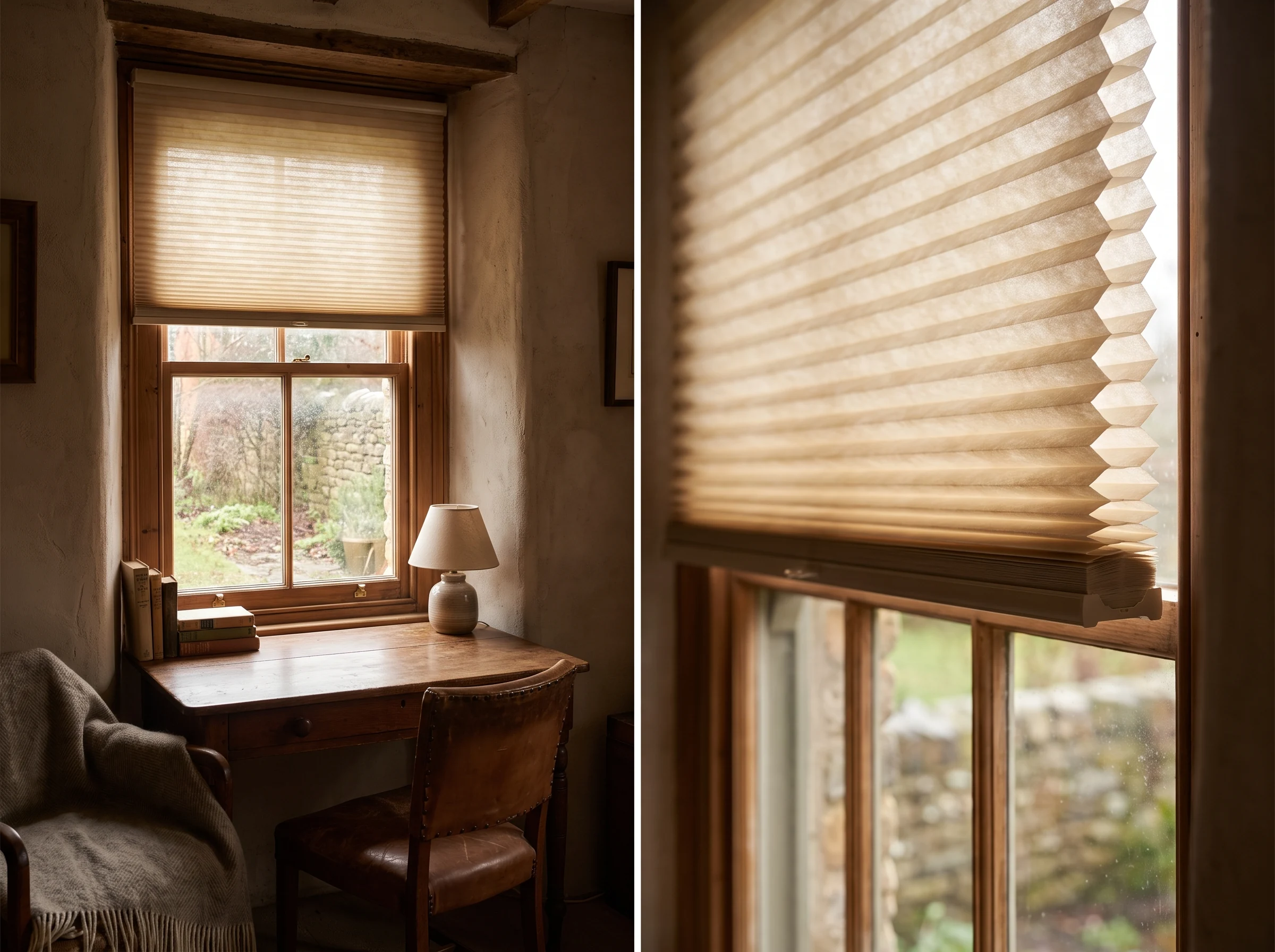
An old single-skin cottage on this coast is cold in July and stays cold. A blind will not fix a wall, but a cellular system fitted snugly into a reveal traps a layer of still air against the glass, and glass is where most of the loss happens overnight. It is the one product on the menu doing work in winter rather than summer.
Attic conversions with gable or raked glazing are common on this strip, and they are the openings people most regret leaving until last. Sky-facing glass takes far more sun over a day than a wall does, and a blind on a sloping plane has to be held in side channels or it will sag away from the glass and leak a bright wedge of light down one edge. Above head height, motorise it — an unreachable control is not a control.
The mountain rises directly behind St James, and the houses climb it in terraces, each one looking over the roof of the one below. That geometry produces the two facts that most often surprise a new owner.
The afternoon ends early. Direct sun goes behind the ridge well before the published sunset, and the higher the property, the later that happens. A house on the lower road can be in shadow while its neighbour two terraces up is still in full sun. Nothing on a weather app tells you this; standing at the window on a clear afternoon in January and again in June does, in about a minute each time.
The view is over somebody's roof. Which means the reflected light reaching an upper property is coming off water, roof sheeting and glass all at once, at three different angles. That is why owners up the slope describe rooms as relentlessly bright rather than sunny — a different complaint with a different answer, and one a heavier fabric does not solve.
Where a window on this slope takes the full early sun with nothing in front of it, the honest answer is to move the shading outside the glass. A fabric hanging on the room side only meets the light after the pane has admitted it — the cloth warms up and hands the heat straight to the room. Carry the interception outside and the energy is stopped in open air, where it goes nowhere near your furniture.
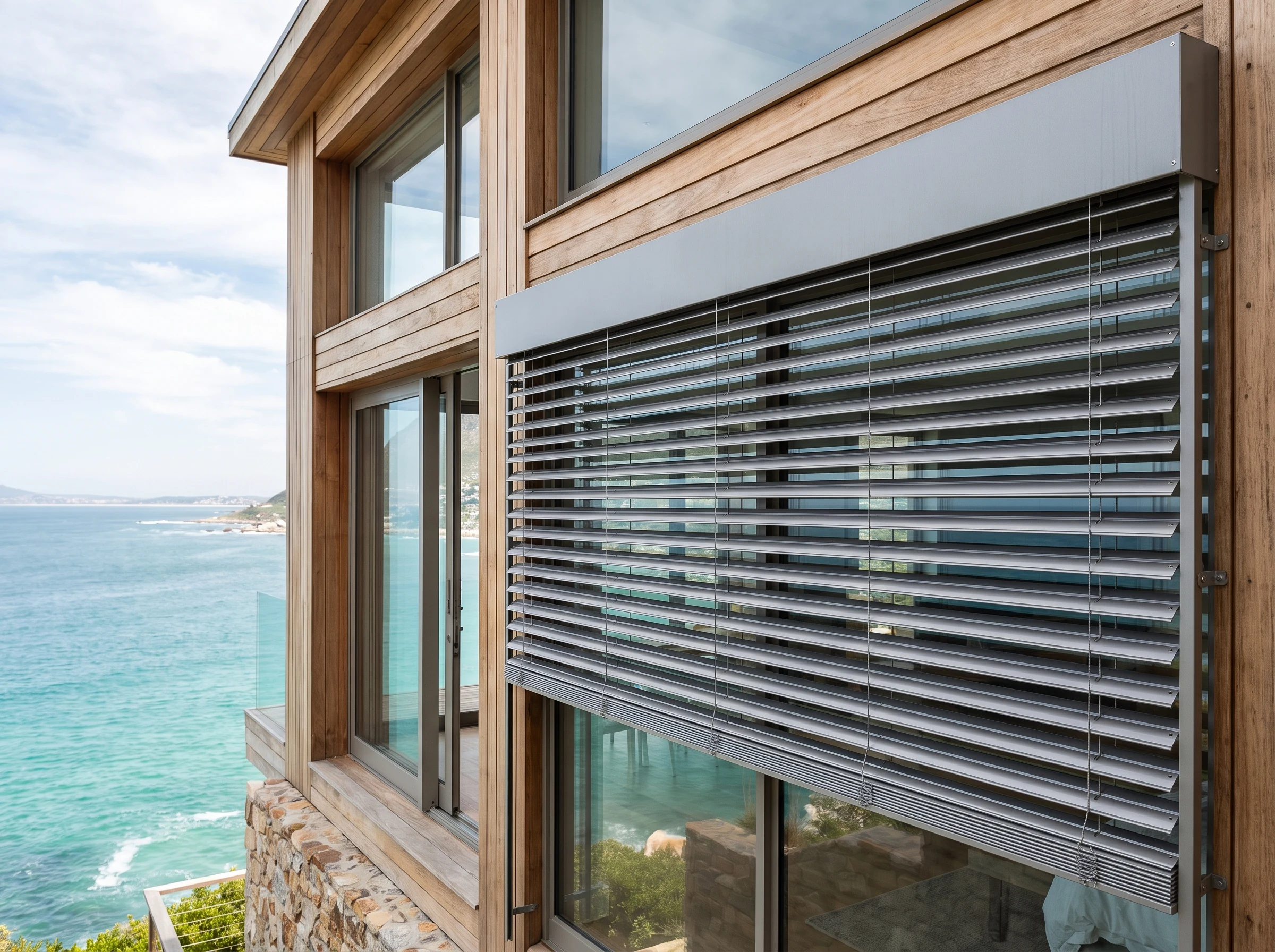
External venetian blinds: aluminium slats mounted clear of the glazing and tilted through the morning. The only product that takes the heat and the low reflected path off the bay while leaving the view intact.
Roller shutters: rigid slats rolling down outside the opening when a room needs shutting down completely. Sun, heat and glare — a shading product, and nothing here is a security claim.
Zip screens: mesh locked into zipped side channels so a deck stays usable when the south-easter is running. On this coast, wind ruins more evenings outdoors than sun does.
From about October to March the south-easter runs up False Bay, and this is the detail that separates St James from an inland suburb catching the same wind: it reaches you having crossed open sea rather than open land. It arrives with salt in it, and after a rough night there is a film on the glass to prove it.
The winter picture reverses. Cape Town's rain comes on cold fronts out of the north-west, and the mountain immediately behind the suburb takes a good deal of that on your behalf. So the season that batters the Atlantic-facing suburbs is comparatively kind here, and the summer season that feels benign elsewhere is the one that tests hardware on this shore.
Three things follow for anything mounted outside:
Every external shading product has a wind speed past which it should be retracted, and nobody who tells you otherwise is being straight with you. The useful conversation is about what happens automatically when that speed arrives, not about pretending the limit does not exist. And even properly specified marine hardware wants a fresh-water rinse after a hard blow — five minutes with a hose, not a defect.
Pulling the five layers together, a rough map of what tends to be right where. None of this replaces a measure; it should make the conversation faster.
Five minutes of preparation, no expertise needed, and it makes the quote sharper.
We measure every opening on site, bring physical samples, and put a written per-window price in front of you before anything is ordered. If a particular window does not need us, we would rather say so at the measure than sell you something for it.
Free in-home measure, samples in hand, written per-window quote afterwards. No cost and no obligation, whether you order or not.
Fill this in and one of our expert consultants will contact you shortly to arrange your free in-home measure.
Where this guide states a fact rather than an opinion, this is where it came from. Anything we could not confirm was left out instead of being rounded up.
The cross-section reading, the recommendations and the opinions in this guide are our own, offered free and without obligation. Nothing here is a heritage approval, a structural opinion, or a professional assessment of any particular property.
Download the PDF if you want this to hand when you measure.